
Termite Treatment in Yonkers, NY
Subterranean termite inspection, soil treatment and baiting for Yonkers homes and buildings. Free estimate, written scope.


Wooded Lots, Older Frames
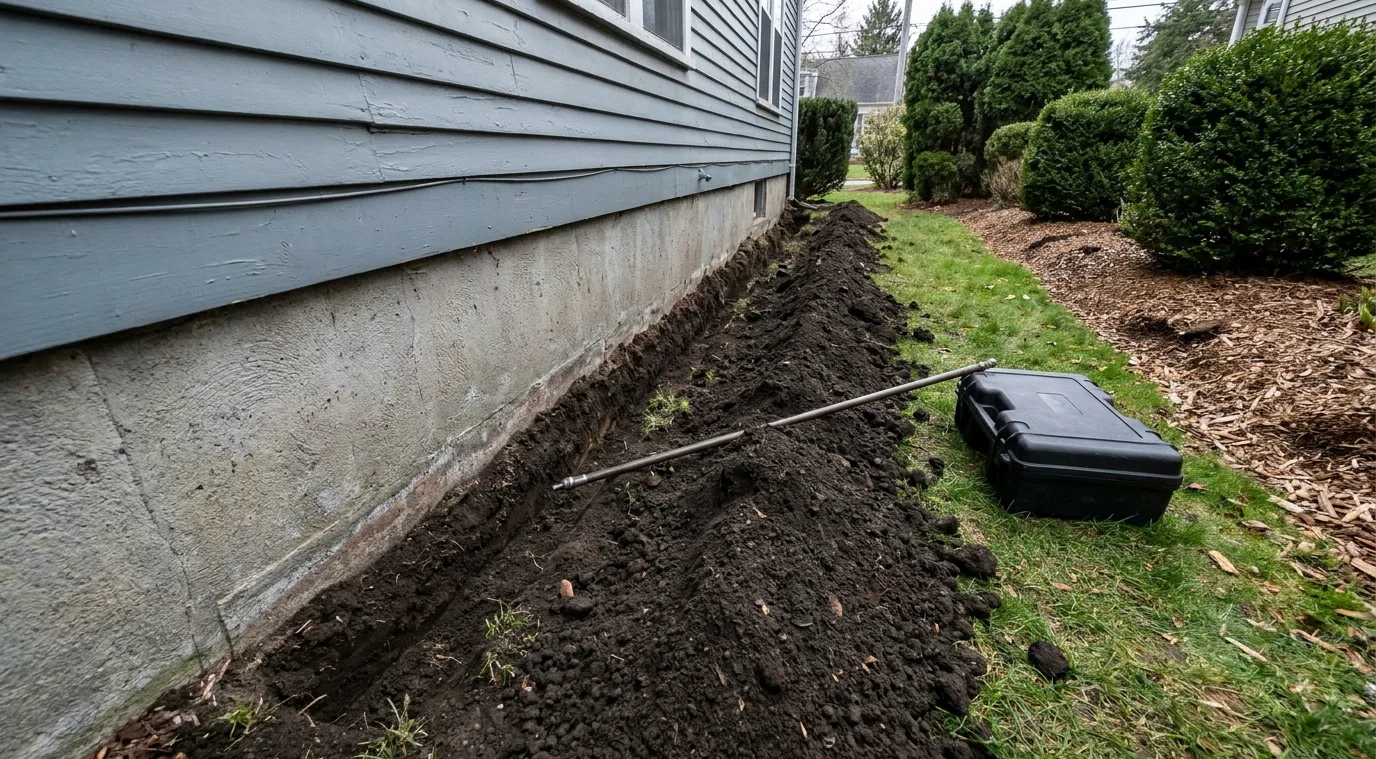
Stumps, buried construction wood and mulch beds against the foundation keep colonies close to Yonkers houses. The inspection starts at the grade line and works in.
Soil Treatment or Baiting
A non-repellent liquid barrier where the foundation can be trenched, or monitored bait stations where rock, patios or wells make that impractical.
Before You Buy or Sell
An NPMA-33 wood-destroying insect report describes what a visual inspection found on the day. We explain what it covers and what it cannot see.
Local Termite Treatment for Yonkers Property Owners
We are a pest control company working across Westchester County, and Yonkers is one of the places we are called to most often. What follows is what we actually know about termite treatment here — the building types, the conditions that drive it, and the local rules — rather than a page of stock copy with a place name dropped into it.
If something is turning up in your Yonkers home or business, call (862) 256-6829 for an inspection. You will get an honest read on what is there and a written estimate before anything is scheduled.
Yonkers, NY at a Glance
Yonkers sits in Westchester County at roughly 82 feet above sea level, was first settled around 1646 and is home to about 211,569 people. Those numbers matter more than they look: density, elevation and age of the housing stock are the three things that decide which pests a place actually gets.
| Population | 211,569 (2020 Census) |
|---|---|
| County | Westchester County, NY |
| Elevation | 82 feet above sea level |
| Founded | 1646 |
| ZIP codes | 10701, 10702, 10703, 10704, 10705, 10710 |
Population from the 2020 US Census. Elevation, ZIP and founding data via Wikidata.
Pest Pressure in Yonkers This Week
Today in Yonkers: Mostly Sunny, around 84°F. Mostly sunny. High near 84, with temperatures falling to around 82 in the afternoon. Northwest wind 5 to 8 mph.
Tonight 65°F, partly cloudy · Saturday 80°F, sunny · Saturday Night 61°F, isolated rain showers
Right now mosquito pressure is high because of mean temperatures around 76°F; general pest pressure is moderate because of daytime temperatures in the foraging range.
How weather drives termites. Swarming is the one weather-timed event: Eastern subterranean termites typically swarm on warm days after rain between March and May, which is when the swarm row appears in the panel above. The feeding colony is a different matter — it works in the soil and inside wood through most of the year, slowing in cold ground but not stopping, and in heated basements it can stay active all winter. A quiet panel means no swarm is likely this week, not that there are no termites.
Forecast from the National Weather Service (public domain). Pest pressure is our own index, calculated from temperature, rainfall and humidity. Updated 2026-09-04.
Is It Termites? Swarmers, Tubes and Damaged Wood
The termite of the Lower Hudson Valley is the Eastern subterranean termite (Reticulitermes flavipes). It nests in the soil and is well suited to the wooded lots, stumps and older frame housing found through much of Westchester and Rockland. Formosan termites are not established in New York, and drywood termites are a problem for warmer states.
Swarmer or flying ant? Three features settle it:
- Wings. A termite swarmer has two pairs of wings of equal length, extending well beyond the body and shed within hours. A winged ant's front wings are clearly longer than its hind wings.
- Waist. Termites are broad-waisted, almost tubular. Ants are pinched sharply between thorax and abdomen.
- Antennae. Termite antennae are straight and beaded. Ant antennae are elbowed.
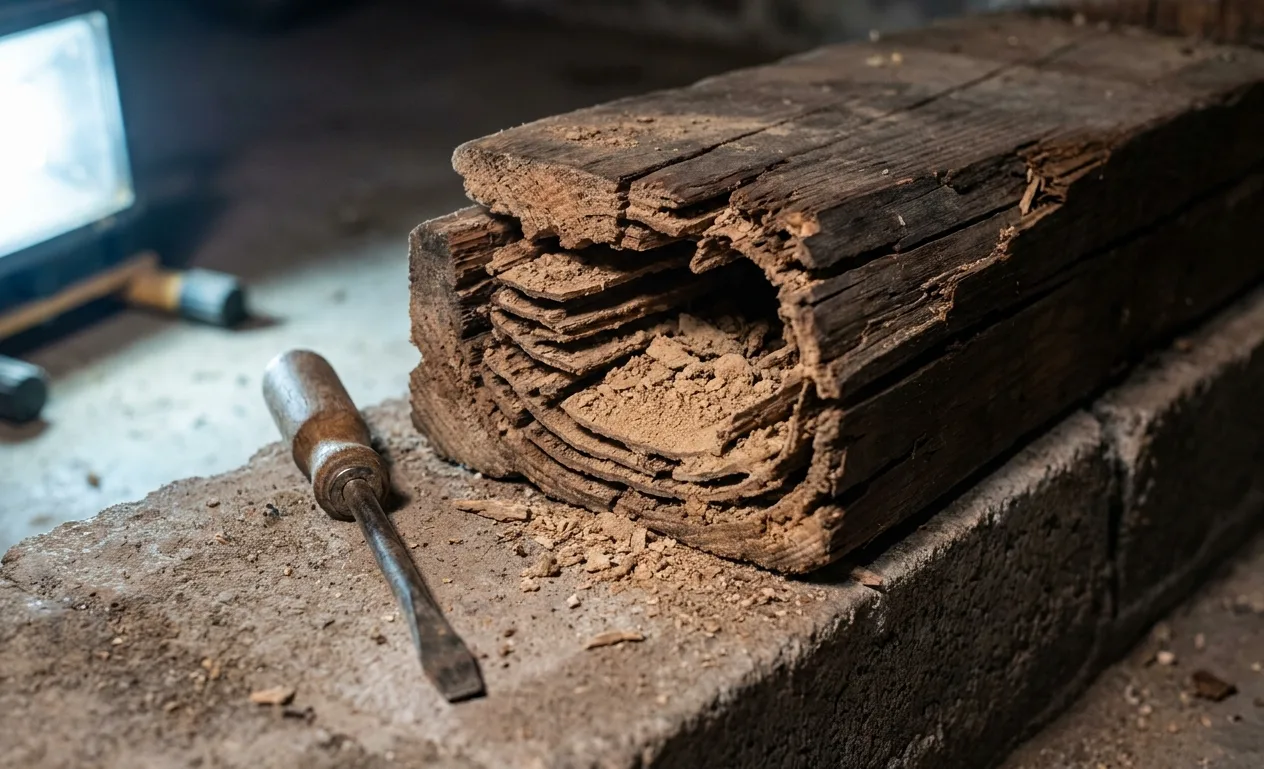
The evidence left behind is usually more useful than the insects. Shed wings in piles on sills and basement floors. Mud tubes, pencil-width earthen runways up a foundation wall, a pier or a pipe, which workers build because they dry out in open air. And damaged wood: termites eat the softer springwood and leave the harder bands, so the galleries follow the grain and are packed with soil and faecal material. Hollow-sounding wood or blistered paint on a sill is worth probing.
The common look-alike is the carpenter ant (Camponotus pennsylvanicus). It nests in wood rather than eating it, so its galleries are clean and smooth, with coarse frass of shavings and insect parts pushed out. Soil in the galleries means termites; clean galleries and a sawdust pile mean ants and, nearly always, a moisture problem.
Wooded Lots, Stone Foundations and Where Termites Get In
This region combines older frame houses, stone and block foundations, and heavily wooded lots — a combination that keeps colonies close to buildings.
- Stumps, roots and buried wood. Trees removed during construction, old stumps near the house, and construction debris buried in backfill are ready-made colony food right against the foundation.
- Stone and rubble foundations. Mortar joints in older stone and block foundations give termites hidden routes into the wall and up to the sill plate.
- Mulch, soil and wood touching the house. Planting beds built up over the siding, deck posts, retaining walls of timber and firewood stacked against the wall.
- Slopes and drainage. On hillside lots water runs toward the uphill foundation wall and keeps the soil there saturated — often the side where we find activity.
- Crawlspaces, porches and garages. Damp crawlspace soil, porch fill, and the slab joint of attached garages.
- Finished lower levels, which hide foundation walls entirely.
Soil Treatment, Baiting and What Actually Works
On detached houses here the choice is usually decided by site conditions. Rock close to the surface, steep grades, patios and retaining walls can make trenching hard, and private wells restrict how near to the water supply soil can be treated.
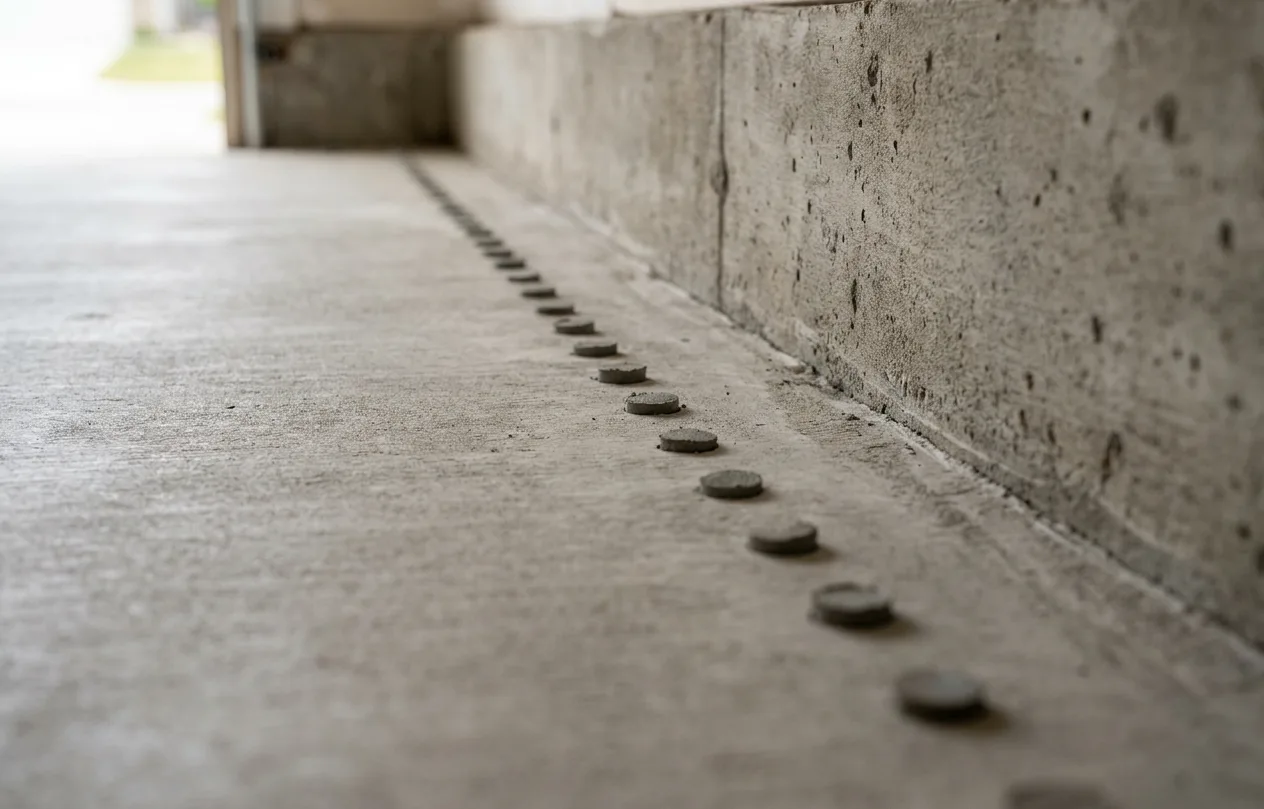
Liquid soil treatment puts a continuous treated zone where termites travel to reach the building: a narrow trench along open foundation, with rodding below it toward the footing, and drilling at close intervals through slabs, porches and cellar floors, which are then patched. Volume is the whole game, applied to the product label.
Non-repellent or repellent. Non-repellents — fipronil, imidacloprid, chlorantraniliprole — cannot be detected, so workers pass through, pick up a dose and carry it back. Repellent pyrethroids such as bifenthrin form a barrier the insects avoid, which only holds if it has no gaps.
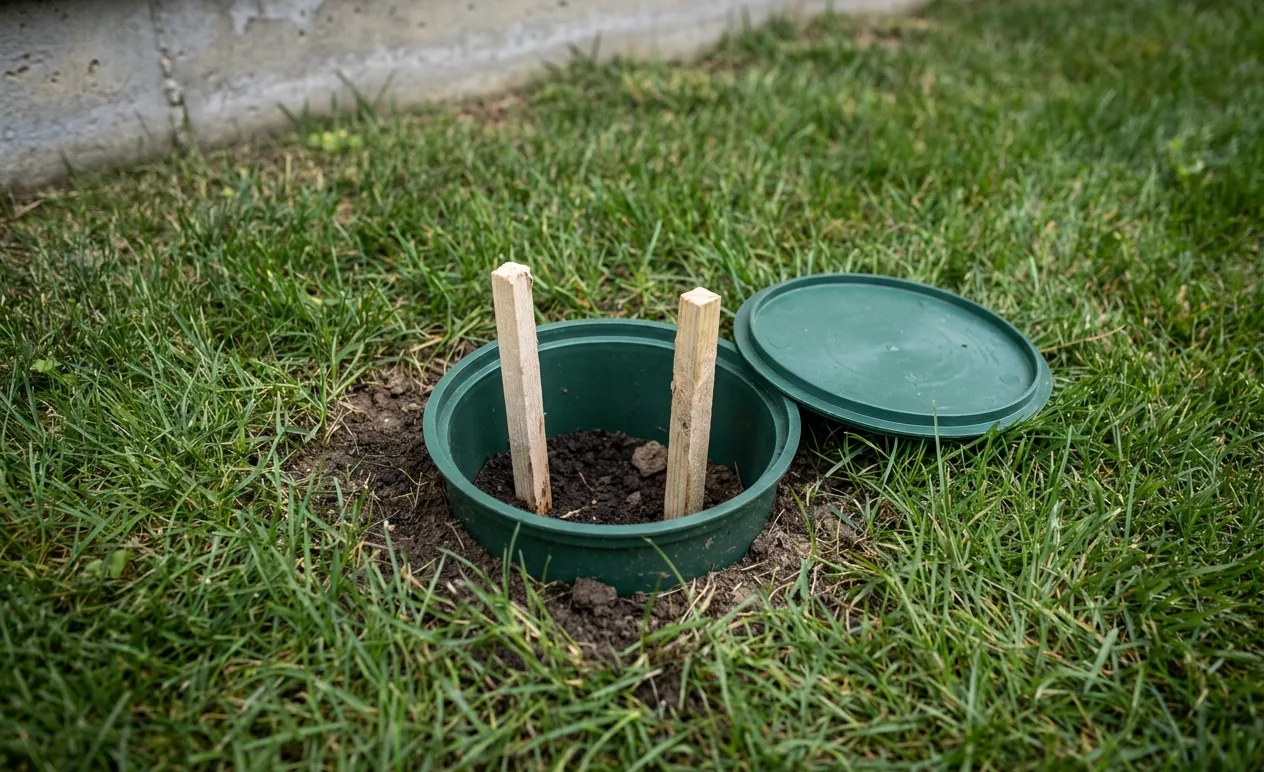
Baiting systems work the other way round. Monitoring stations go into the soil around the building and are checked on a schedule; once termites are feeding, a cellulose bait with a chitin synthesis inhibitor (noviflumuron, hexaflumuron) goes in, which stops workers moulting. The colony declines over months. Slower, but it targets the colony and needs no drilling.
Spot treatments and borates. Foam injected into an active gallery kills the termites in that wood, not the colony in the soil. Borate (disodium octaborate tetrahydrate) on bare, unfinished wood protects that timber — ideal when joists and sills are exposed during renovation — but does nothing to the soil.
Why do-it-yourself products fail. Spraying a visible tube kills a handful of workers while the colony, foraging over tens of metres of soil, builds another. Consumer products cannot reach the depth and volume a foundation needs. Breaking a tube and watching whether it is rebuilt is useful diagnosis, not treatment.
Tell us about wells and water features before the inspection. Product labels restrict soil treatment near wells and cisterns, and on some lots baiting is the practical answer for that reason alone.
Buying, Selling and Who Is Responsible in New York State
Almost everything written about pests in "New York" is about New York City. HPD, 311 and the city's housing laws do not reach Westchester or Rockland. For termites, that matters less than it does for other pests — most termite questions here come up when a house changes hands.
The NPMA-33 report. The Wood Destroying Insect Inspection Report is the standard form used in real estate transactions here, routinely requested by buyers and lenders. It records whether visible evidence of termites and other wood-destroying insects was found, where, and whether there is visible damage. Two things it is not: it is not a warranty that the building is free of termites, and it is not a structural assessment. It is a visual snapshot of the accessible areas on the day. Finished walls, stored contents and floor coverings hide evidence; read the section listing what could not be inspected.
Disclosure. Sellers' disclosure paperwork and buyers' contracts commonly ask about wood-destroying insects and past treatment, and a treatment history with dates, method and any service agreement is useful to both sides. Ask your attorney what the contract and disclosure in your transaction actually require; that is a legal question, not a pest control one.
If you rent, structural termite damage is the owner's to correct. The warranty of habitability in New York Real Property Law section 235-b applies statewide, and local code enforcement applies the New York State Property Maintenance Code. Report it to the owner in writing and keep a copy.
Before any treatment, ask for the applicator's New York State certification and the business registration, and a written report of what was found and where.
General information about the rules as written, not legal advice about your situation. Confirm current requirements with the agency named before relying on them.
Termite Treatment — Common Questions
We have a lot of trees. Should we be worried?
Wooded lots support termite colonies naturally, so the question is whether they have a route into your house. Keeping stumps and firewood away from the foundation, pulling mulch back so the foundation is visible, and keeping gutters working reduce the risk considerably. An inspection tells you whether there is activity now.
The buyer's inspection found old termite damage. Now what?
Establish whether it is active or historical, find any treatment paperwork, and have damaged structure assessed by a contractor or engineer. Old damage from a colony that was treated is common in older houses here; active termites with no treatment history is the situation to act on.
Is baiting safer near a well?
Baiting puts very little active ingredient into the environment and it is contained in stations, which is why it is often preferred close to wells and water. Soil treatment near a well is restricted by the product label and sometimes not possible at all.
Pest Pressure in Yonkers, NY
Yonkers is the fourth-largest city in New York State and it is built on hills, which matters more than it sounds. The land drops steeply from the eastern ridges to the Hudson River, and that grade decides where water goes, where it collects and which blocks flood.
The city divides sharply. Southwest Yonkers — Getty Square, Nodine Hill, Ludlow, Park Hill — is among the densest housing in Westchester County: pre-war multi-family walk-ups and apartment blocks packed on steep streets, with continuous party walls, shared cellars and an ageing combined sewer that surcharges in heavy rain. The northeast — Crestwood, Colonial Heights, Dunwoodie and the Bronxville edge — is detached suburban housing on wooded lots with mature canopy.
The Saw Mill River runs through the middle, daylighted through downtown in recent years; the Bronx River forms part of the eastern boundary. Both corridors hold water and produce the local mosquito pressure. The Hudson waterfront and the rail line along it carry industrial legacy and continuous rodent harborage.
Yonkers uses ZIPs 10701 through 10710.
What Yonkers Buildings Are Made Of
Two housing worlds, and an inspection has to establish which one it is in before anything else.
In the southwest, pre-war walk-ups and apartment buildings on steep, tightly packed streets. Stacked kitchens and bathrooms share plumbing risers running cellar to roof, and in most of this stock the escutcheon plates around those penetrations are missing, leaving an open annular gap at every floor. That gap is the vertical route for German cockroach, mice and bed bugs, and it is the single most common reason a well-executed single-apartment treatment fails within weeks. Party walls run continuously between buildings and cellars often adjoin, so a population moves along a block without surfacing. Cellars have floor drains tied into old laterals, which is the American cockroach route whenever the sewer surcharges.
In the northeast, detached single-family housing — many of the older houses balloon-framed, so a mouse entering at the sill reaches the attic inside the wall cavity. Attached garages, full basements, mature foundation planting holding moisture against the siding, and overhanging limbs giving squirrels roof access to soffit returns.
Between them sits a large stock of two- and three-family houses on the hillsides, sharing the risers and wall voids of the denser stock on smaller lots.
The Calls We Get Most in Yonkers
German cockroach through a vertical line of a southwest walk-up. Same units on consecutive floors, shared kitchen riser.
Mice on upper floors, travelling the riser chase in the apartment stock or the balloon-framed wall cavity in the older houses.
Water bugs in cellars after heavy rain. Combined sewer surcharge through dried floor drain traps.
Bed bugs between adjoining apartments through wall voids and outlet boxes.
Rats along the waterfront, the rail corridor and behind the Getty Square food businesses.
Attic squirrels and carpenter ants in the northeast, tracking overhanging limbs and long-running roof or gutter leaks.
Mosquitoes along the Saw Mill and Bronx River corridors a week to ten days after heavy rain.
Local Rules and Who to Call in Yonkers
Pests in a Yonkers rental are the owner's responsibility, and the framework is New York State law — not the New York City rules most published advice describes. HPD has no jurisdiction here and 311 is a New York City service.
Your lever is the warranty of habitability at Real Property Law section 235-b — statewide, not waivable by a lease, and it obliges a landlord to keep the premises fit for human habitation. A persistent infestation is squarely a habitability condition under it.
Enforcement runs through the City of Yonkers Department of Housing and Buildings, which applies the Property Maintenance Code of New York State, requiring structures to be kept free from insect and rodent infestation and placing the duty on the owner. The Westchester County Department of Health handles public health nuisance complaints and mosquito surveillance, treating standing water on public land at no charge.
Report to the owner or managing agent in writing and keep the copy before escalating — a documented and ignored complaint is what makes an inspection produce a finding.
For independent background, Cornell University's New York State Integrated Pest Management program publishes a guide to termites in New York, including where they feed and how to spot mud tubes.
Areas We Cover in Yonkers
- Getty Square
- Nodine Hill
- Park Hill
- Ludlow
- Crestwood
- Colonial Heights
- Dunwoodie
- Northwest Yonkers
- Hudson waterfront
- Saw Mill River corridor
ZIPs 10701 through 10710.
Yonkers — Local Questions
My landlord will not deal with the roaches. Who do I actually call?
The City of Yonkers Department of Housing and Buildings, which enforces the Property Maintenance Code of New York State and can cite the owner. Not HPD and not 311 — those are New York City services with no authority over a Yonkers building, and calling them wastes weeks. Behind that sits the warranty of habitability at Real Property Law 235-b, which is statewide and cannot be waived by a lease. Put the complaint to the landlord in writing first and keep the copy.
Our apartment was treated and the roaches came back in a month. Why?
Almost certainly because the apartments above and below yours share a kitchen riser with yours and were not treated. In this housing stock the population lives in the chase between units, not in any one kitchen, so treating a single apartment leaves a reservoir that reseeds it. What holds is treating the whole line on the same day with gel bait and a growth regulator, and sealing the riser penetrations with proper escutcheon plates.
Termite Treatment Near Yonkers
We cover the surrounding towns from the same base, so if you are just outside Yonkers the nearest service pages are below.
- Termite Treatment in Mount Vernon, NY 3 mi
- Termite Treatment in New Rochelle, NY 5 mi
- Termite Treatment in Bronx, NY 7 mi
- Termite Treatment in White Plains, NY 8 mi
- Termite Treatment in Fort Lee, NJ 8 mi
In Yonkers we also handle pest control, rodent control, bed bug treatment, cockroach control, and mosquito control. Our main service pages cover cockroach control, termite treatment and mosquito control.
📍 On the map
Found Wings on a Windowsill?
Shed wings or mud tubes on the foundation are worth a look before the damage is. Free estimate, written scope.
Call About TermitesHow Termite Treatment Runs in Yonkers
Four stages, from the first sign to the monitored barrier
Termite work is slow and structural, and the order matters. This is the sequence a Yonkers job follows.