
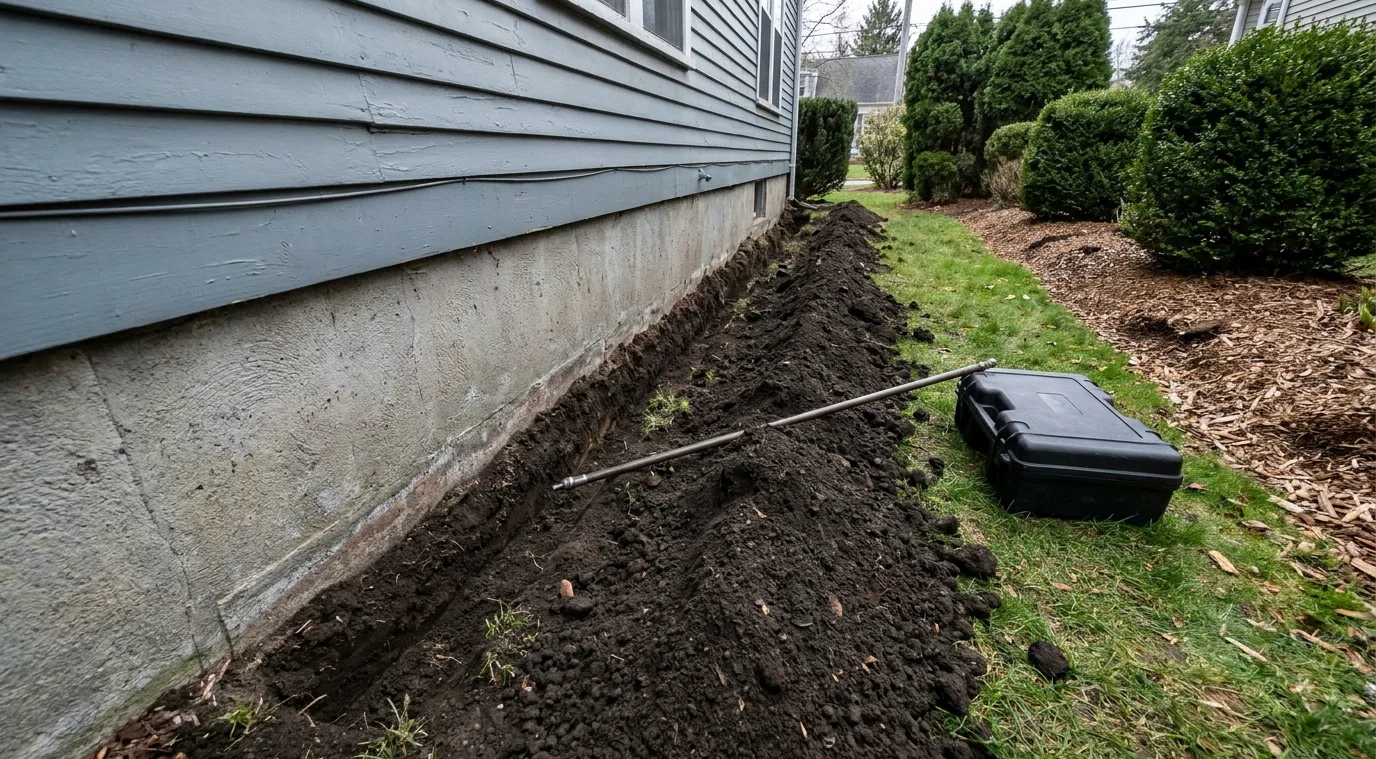
Termite Treatment in East Brunswick, NJ
Subterranean termite inspection, soil treatment and baiting for East Brunswick homes and buildings. Free estimate, written scope.


Full Foundation Inspection
Garage slab joints, porch fill, crawlspace piers and the finished basement wall — the places termites actually enter a detached East Brunswick house, checked and recorded.
Soil Treatment or Baiting
A trenched and rodded non-repellent barrier, or monitored bait stations that remove the colony. We set out what each involves before anything is scheduled.
NPMA-33 Reports for Sales
The standard wood-destroying insect report used in real estate transactions, written from a visual inspection and clear about what could and could not be seen.
Local Termite Treatment for East Brunswick Property Owners
We are a pest control company working across Middlesex County, and East Brunswick is one of the places we are called to most often. What follows is what we actually know about termite treatment here — the building types, the conditions that drive it, and the local rules — rather than a page of stock copy with a place name dropped into it.
If something is turning up in your East Brunswick home or business, call (862) 256-6829 for an inspection. You will get an honest read on what is there and a written estimate before anything is scheduled.
East Brunswick, NJ at a Glance
East Brunswick sits in Middlesex County at roughly 121 feet above sea level and is home to about 49,715 people. Those numbers matter more than they look: density, elevation and age of the housing stock are the three things that decide which pests a place actually gets.
| Population | 49,715 (2020 Census) |
|---|---|
| County | Middlesex County, NJ |
| Elevation | 121 feet above sea level |
| ZIP codes | 08816 |
Population from the 2020 US Census. Elevation, ZIP and founding data via Wikidata.
Pest Pressure in East Brunswick This Week
Today in East Brunswick: Mostly Sunny then Slight Chance Showers And Thunderstorms, around 85°F. A slight chance of showers and thunderstorms after 3pm. Mostly sunny, with a high near 85. Northwest wind around 5 mph. Chance of precipitation is 20%.
Tonight 64°F, slight chance showers and thunderstorms · Saturday 81°F, mostly sunny · Saturday Night 61°F, partly cloudy
Right now mosquito pressure is high because of mean temperatures around 77°F; general pest pressure is moderate because of daytime temperatures in the foraging range.
How weather drives termites. Swarming is the one weather-timed event: Eastern subterranean termites typically swarm on warm days after rain between March and May, which is when the swarm row appears in the panel above. The feeding colony is a different matter — it works in the soil and inside wood through most of the year, slowing in cold ground but not stopping, and in heated basements it can stay active all winter. A quiet panel means no swarm is likely this week, not that there are no termites.
Forecast from the National Weather Service (public domain). Pest pressure is our own index, calculated from temperature, rainfall and humidity. Updated 2026-09-04.
Is It Termites? Swarmers, Tubes and Damaged Wood
Suburban New Jersey is termite country. The species is the Eastern subterranean termite (Reticulitermes flavipes), a soil-nesting insect whose colonies are common in wooded and landscaped lots across the state. Formosan termites are not established here and drywood termites belong to warmer climates, so the question is almost never which termite — it is whether what you found is a termite at all.
Swarmer or flying ant? Three features settle it:
- Wings. A termite swarmer has two pairs of wings of equal length, extending well beyond the body and shed within hours. A winged ant's front wings are clearly longer than its hind wings.
- Waist. Termites are broad-waisted, almost tubular. Ants are pinched sharply between thorax and abdomen.
- Antennae. Termite antennae are straight and beaded. Ant antennae are elbowed.
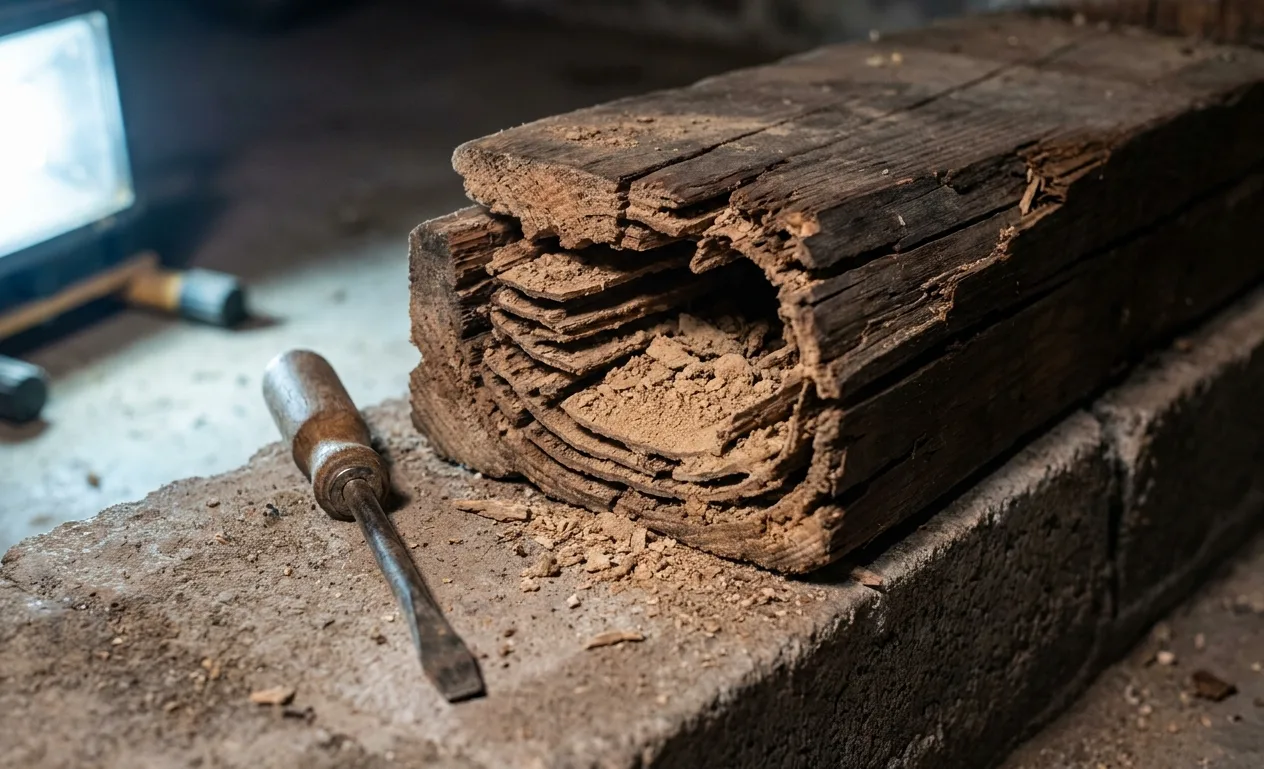
The evidence left behind is usually more useful than the insects. Shed wings in piles on sills and basement floors. Mud tubes, pencil-width earthen runways up a foundation wall, a pier or a pipe, which workers build because they dry out in open air. And damaged wood: termites eat the softer springwood and leave the harder bands, so the galleries follow the grain and are packed with soil and faecal material. Hollow-sounding wood or blistered paint on a sill is worth probing.
The common look-alike is the carpenter ant (Camponotus pennsylvanicus). It nests in wood rather than eating it, so its galleries are clean and smooth, with coarse frass of shavings and insect parts pushed out. Soil in the galleries means termites; clean galleries and a sawdust pile mean ants and, nearly always, a moisture problem.
How Termites Reach a Detached House
A detached East Brunswick house on a planted lot offers more ways in than an attached one, nearly all at ground level.
- Mulch and soil against the siding. Deep mulch beds keep the soil moist and bridge any gap between grade and wood. Several inches of visible foundation between soil and siding is the single most useful habit a homeowner can have.
- Garage slab and porch joints. The expansion joint where the garage slab meets the foundation, and the fill under porches, steps and stoops, give termites a hidden route to the sill plate. The attached garage is one of the most common entry points we see.
- Crawlspaces. Exposed soil, damp air, piers with wood resting on them, and form boards left from construction. A crawlspace with a moisture problem is a crawlspace with a termite risk.
- Wood touching soil. Deck posts, fence lines butted to the house, trellises, stair stringers and buried construction wood or old tree stumps close to the foundation.
- Gutters and downspouts that overflow or discharge against the foundation, and irrigation heads spraying the wall.
- Finished basements. Framed and panelled walls hide tubes on the foundation for years. Additions and sunrooms on slabs are another blind spot, because the joint between old and new foundation is hard to see.
Soil Treatment, Baiting and What Actually Works
On a detached house the full range of methods is usually available, and the choice comes down to the building, the site and how quickly you need activity stopped.
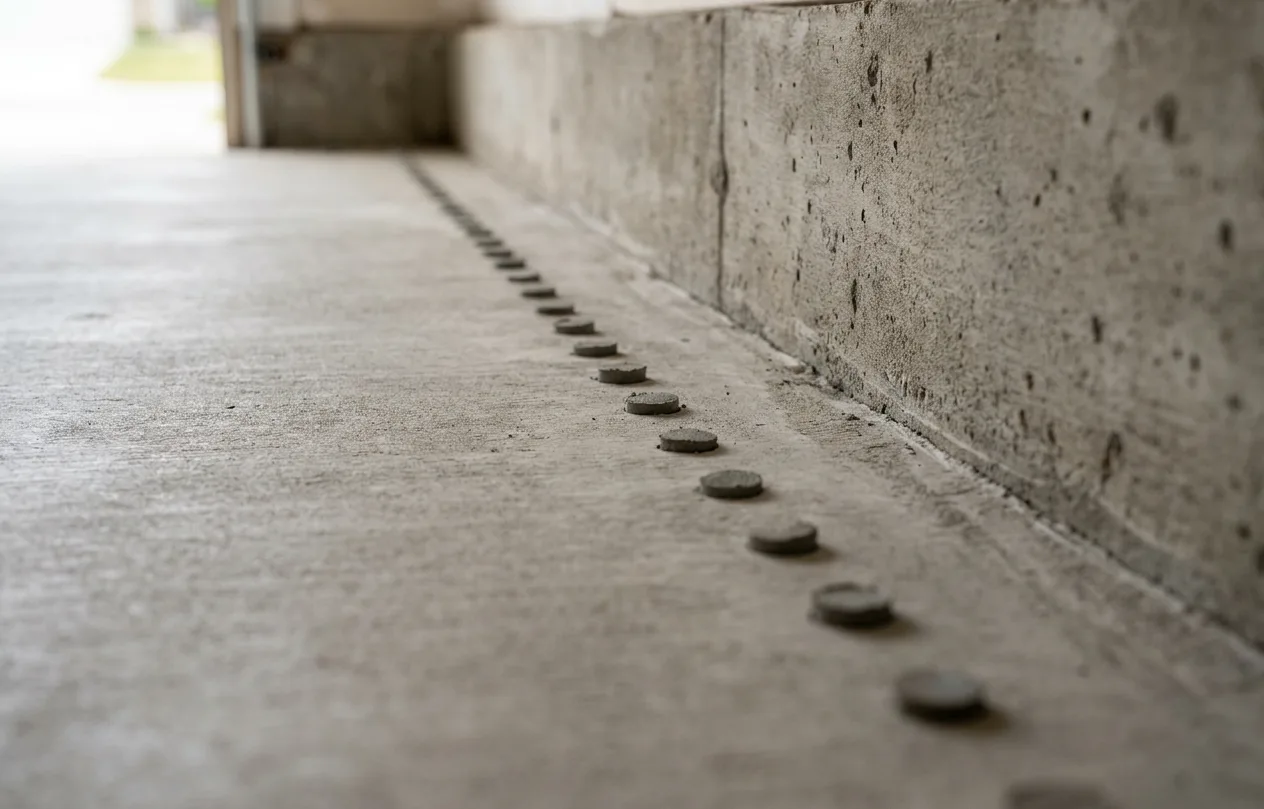
Liquid soil treatment puts a continuous treated zone where termites travel to reach the building: a narrow trench along open foundation, with rodding below it toward the footing, and drilling at close intervals through slabs, porches and cellar floors, which are then patched. Volume is the whole game, applied to the product label.
Non-repellent or repellent. Non-repellents — fipronil, imidacloprid, chlorantraniliprole — cannot be detected, so workers pass through, pick up a dose and carry it back. Repellent pyrethroids such as bifenthrin form a barrier the insects avoid, which only holds if it has no gaps.
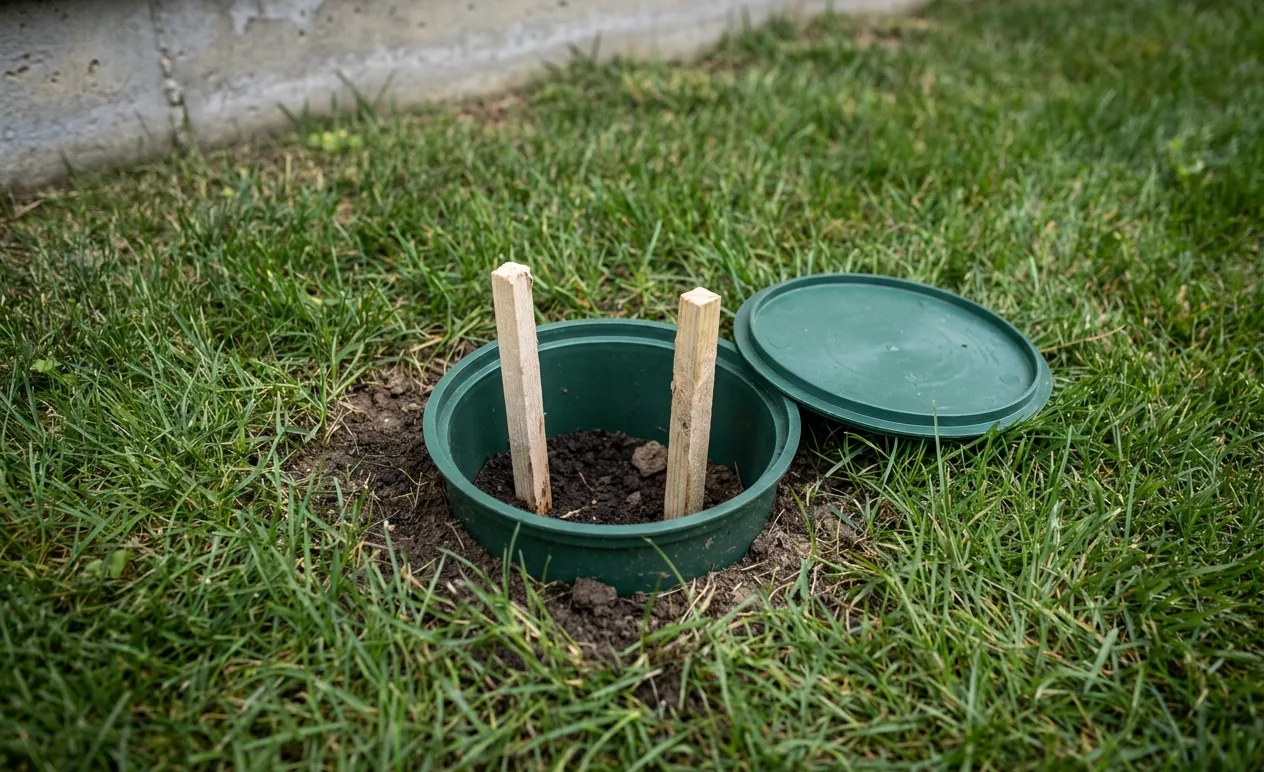
Baiting systems work the other way round. Monitoring stations go into the soil around the building and are checked on a schedule; once termites are feeding, a cellulose bait with a chitin synthesis inhibitor (noviflumuron, hexaflumuron) goes in, which stops workers moulting. The colony declines over months. Slower, but it targets the colony and needs no drilling.
Spot treatments and borates. Foam injected into an active gallery kills the termites in that wood, not the colony in the soil. Borate (disodium octaborate tetrahydrate) on bare, unfinished wood protects that timber — ideal when joists and sills are exposed during renovation — but does nothing to the soil.
Why do-it-yourself products fail. Spraying a visible tube kills a handful of workers while the colony, foraging over tens of metres of soil, builds another. Consumer products cannot reach the depth and volume a foundation needs. Breaking a tube and watching whether it is rebuilt is useful diagnosis, not treatment.
Tell us about any private well before the inspection. Labels restrict soil treatment near wells and cisterns, and baiting may be the right answer there.
Buying, Selling and the Termite Inspection Report
Most termite questions in suburban New Jersey come up at one of two moments: when swarmers appear in spring, and when a house is being sold.
The NPMA-33 report. The Wood Destroying Insect Inspection Report is the standard form used in real estate transactions here, routinely requested by buyers and lenders. It records whether visible evidence of termites and other wood-destroying insects was found, where, and whether there is visible damage. Two things it is not: it is not a warranty that the building is free of termites, and it is not a structural assessment. It is a visual snapshot of the accessible areas on the day. Finished walls, stored contents and floor coverings hide evidence; read the section listing what could not be inspected.
If evidence is found during a sale, ask whether it is active or old, whether there is treatment paperwork, whether any service agreement transfers, and have damage assessed by a contractor or engineer. Old damage from a treated colony is common and not in itself a reason to walk away.
What a thorough termite estimate includes: where activity was found; the conducive conditions to correct; the method and why it suits this building; the product class; how often bait stations are checked, if baiting; and re-inspection and re-service terms in writing. Ask for the applicator's certification for termite work — in New Jersey termites and wood-destroying insects are their own certification category (7B).
General information about the rules as written, not legal advice about your situation. Confirm current requirements with the agency named before relying on them.
Termite Treatment — Common Questions
Our neighbours had termites. Are we at risk?
You are in the same soil, and colonies forage well beyond one lot, so it is a reasonable prompt for an inspection. Risk at your house depends on your own conditions — mulch against the siding, wood touching soil, moisture in the crawlspace or basement — and those are things you can change regardless.
We have a finished basement. How can anyone tell?
Not completely. An inspection looks at the exterior foundation, the garage, the utility room, the unfinished sections, the sill wherever it is visible, and any sign on finished surfaces such as blistered trim or wings at windows. The report states which areas were concealed, and that limitation is real.
How long does baiting take?
Monitoring stations may take weeks or months to be found. Once feeding is confirmed and bait is in place, colony decline typically takes a few months, which is why stations are checked on a schedule. Soil treatment stops activity faster; baiting removes the colony more thoroughly.
Pest Pressure in East Brunswick, NJ
East Brunswick is a settled suburban township of about twenty-two square miles between the Raritan corridor and the farmland to the south, and its pest pressure is driven less by dramatic geography than by water in the low ground and a very heavy commercial corridor.
Lawrence Brook runs through the township and Farrington Lake sits on it, and the low ground along both holds water after storms, keeps soil damp against foundations, and is where the mosquito problem originates. The Route 18 corridor is the commercial spine — a dense run of retail, restaurants, supermarkets and the mall, with large refuse volumes, dumpster enclosures and landscaped islands that provide food and harborage for Norway rats on a scale no residential street produces. Residential blocks backing onto it absorb the overflow.
The New Jersey Turnpike crosses the township and adds embankment harborage. Sections read differently: the older blocks near Old Bridge Turnpike, the mid-century subdivisions around Tices Lane and Cranbury Road, the wooded south toward the Monroe border, and the apartment and townhouse corridors.
East Brunswick uses ZIP 08816.
What East Brunswick Buildings Are Made Of
Predominantly detached post-war single-family — splits, bi-levels, ranches and colonials from the 1950s through the 1970s on quarter-acre lots with full basements and attached garages — with a substantial layer of garden apartment and townhouse complexes along the corridors.
Two features drive most of the calls. The attached garage, where a worn bottom seal and failed corner gaskets give a mouse a route straight up the common wall into the house. And foundation planting: shrubs and mulch installed when these houses were new have had sixty years to grow up against the siding, holding moisture at the wall and burying the strip of foundation where termite mud tubes would be visible during an inspection.
Basements are generally full, and those on the Lawrence Brook side run damp, which brings the moisture-dependent insects — springtails, silverfish, camel crickets, centipedes — that will not persist in a dry space.
The garden apartment and townhouse stock sits on slabs or with attached construction, where entry is at the slab edge and thresholds and shared ceiling voids let a population move along a building.
The Calls We Get Most in East Brunswick
Mice through attached garages each autumn.
Rats in residential yards backing onto the Route 18 corridor. Commercial refuse and landscaped harborage, with burrows crossing onto residential lots.
Termites where planting and mulch have built up against the foundation.
Basement insects on the brook side. A moisture problem rather than an infestation problem.
Mosquitoes near Lawrence Brook and Farrington Lake a week to ten days after heavy rain.
Carpenter ants tracking a deck ledger, bay window head or long-overflowing gutter.
Mice in garden apartment ground-floor units, moving along the shared ceiling void.
Local Rules and Who to Call in East Brunswick
East Brunswick's health department and code enforcement handle property maintenance and pest complaints, including commercial refuse-handling conditions — the route worth using if the source behind you is a dumpster enclosure rather than a neighbour's yard, since you cannot treat a food source you do not control. Rental buildings of five units or more are registered under the Hotel and Multiple Dwelling Law and inspected on a cycle by the New Jersey Department of Community Affairs. The Middlesex County mosquito control programme treats catch basins and standing water on public land at no cost and responds to reports, which reaches the brook and lake sources that private yard treatment cannot. For transactions the termite inspection is the NPMA-33 form and covers visually accessible areas only.
Areas We Cover in East Brunswick
- Old Bridge Turnpike area
- Tices Lane
- Cranbury Road
- Route 18 corridor
- Farrington Lake area
- Lawrence Brook corridor
- Milltown border
- South East Brunswick
ZIP 08816 covers the township.
East Brunswick — Local Questions
Our house is from the 1960s. What is the single most useful thing to check?
Pull the mulch and planting back off the foundation. It sounds trivial and it is the highest-value free thing you can do on this housing stock. Decades of added mulch hold moisture against the siding and bury the few inches of exposed foundation where subterranean termite mud tubes would be visible. Clearing that strip makes the property both less attractive and actually inspectable, which is what lets a problem get caught early rather than after years of damage.
We back onto the shopping corridor and get rats. What can we do?
On your own property, remove harborage and have burrows treated and collapsed. Off it, the dumpster enclosures and refuse handling behind the commercial strip are enforceable through township code enforcement, and a written complaint naming the specific property does far more than repeatedly treating your own yard. The food source sets the population size, and it is not on your lot.
Termite Treatment Near East Brunswick
We cover the surrounding towns from the same base, so if you are just outside East Brunswick the nearest service pages are below.
- Termite Treatment in North Brunswick, NJ 4 mi
- Termite Treatment in New Brunswick, NJ 4 mi
- Termite Treatment in Piscataway, NJ 5 mi
- Termite Treatment in Sayreville, NJ 6 mi
- Termite Treatment in Old Bridge, NJ 6 mi
In East Brunswick we also handle pest control, rodent control, bed bug treatment, cockroach control, and mosquito control. Our main service pages cover cockroach control, termite treatment and mosquito control.
📍 On the map
Found Wings on a Windowsill?
Shed wings or mud tubes on the foundation are worth a look before the damage is. Free estimate, written scope.
Call About TermitesHow Termite Treatment Runs in East Brunswick
Four stages, from the first sign to the monitored barrier
Termite work is slow and structural, and the order matters. This is the sequence a East Brunswick job follows.