
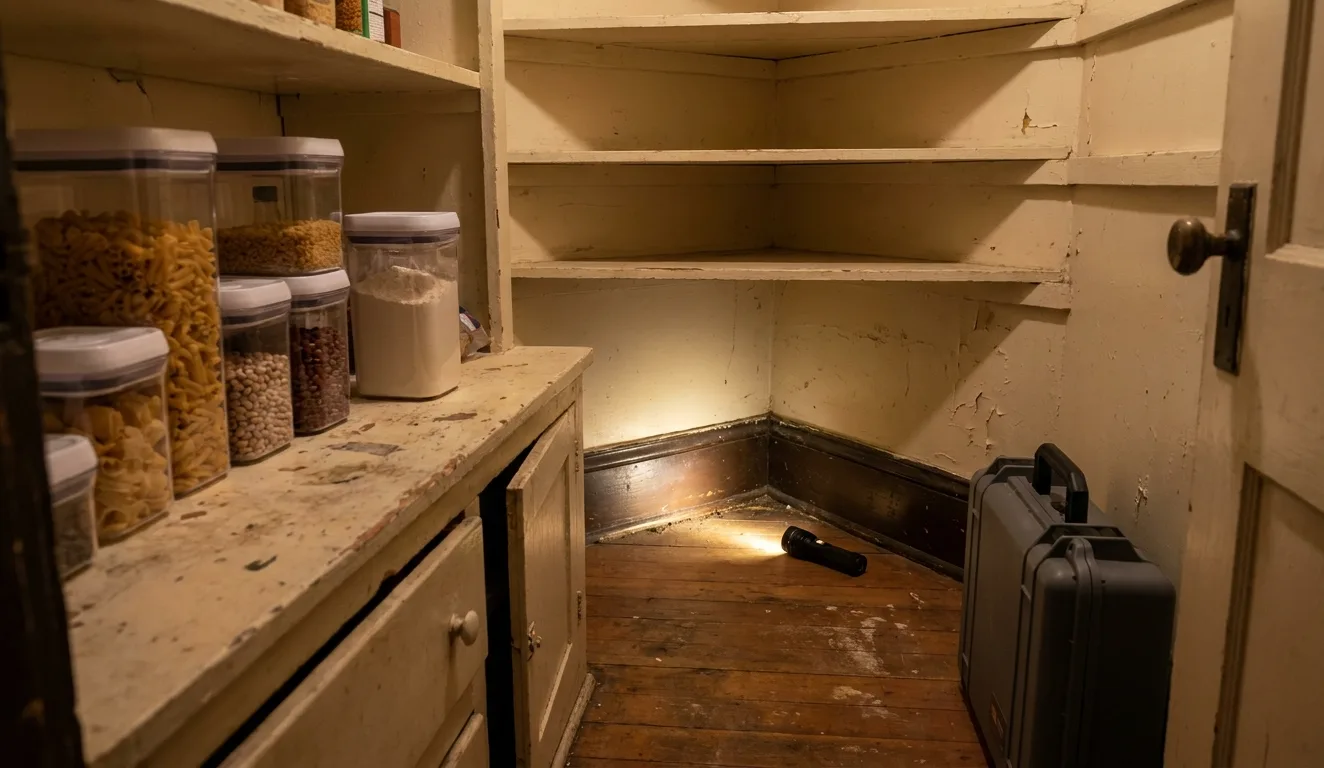
Mouse Control Near Me in Elizabeth, NJ
Mice nest inside the building they are eating in. We find the nest zone, trap it and close the gaps. Free estimate, written scope.


Nest Zones, Not Room Sightings
A mouse seen in the kitchen of a Elizabeth walk-up usually lives inside the wall behind the stove or the chase beside it. That is where the work goes.
Neighbouring Units Considered
Shared walls and pipe chases mean one apartment's mice are often the next apartment's mice. We ask about the units around yours before setting a single trap.
Gnaw-Proof Sealing
Metal mesh and mortar at the gaps mice actually use — behind appliances, at radiator pipes and under sinks — so the catch count falls and stays down.
Local Mouse Control for Elizabeth Property Owners
We are a pest control company working across Union County, and Elizabeth is one of the places we are called to most often. What follows is what we actually know about mouse control here — the building types, the conditions that drive it, and the local rules — rather than a page of stock copy with a place name dropped into it.
If something is turning up in your Elizabeth home or business, call (862) 256-6829 for an inspection. You will get an honest read on what is there and a written estimate before anything is scheduled.

Elizabeth, NJ at a Glance
Elizabeth sits in Union County at roughly 16 feet above sea level, was first settled around 1665 and is home to about 137,298 people. Those numbers matter more than they look: density, elevation and age of the housing stock are the three things that decide which pests a place actually gets.
| Population | 137,298 (2020 Census) |
|---|---|
| County | Union County, NJ |
| Elevation | 16 feet above sea level |
| Founded | 1665 |
| ZIP codes | 07201, 07202, 07207, 07208 |
Population from the 2020 US Census. Elevation, ZIP and founding data via Wikidata.
Pest Pressure in Elizabeth This Week
Today in Elizabeth: Slight Chance Showers And Thunderstorms, around 85°F. A slight chance of showers and thunderstorms before 5pm. Mostly sunny, with a high near 85. Northwest wind 3 to 7 mph. Chance of precipitation is 20%. New rainfall amounts less than a tenth of an inch possible.
Tonight 67°F, partly cloudy · Saturday 81°F, sunny · Saturday Night 63°F, partly cloudy
Right now mosquito pressure is high because of mean temperatures around 77°F; general pest pressure is moderate because of daytime temperatures in the foraging range.
Mice and the forecast. A house mouse already nesting in your walls barely notices the weather. What the forecast changes is arrivals: once overnight lows slip into the 40s, mice living in sheds, hedges and wall bases start looking for warmth, and the rodent row above climbs with each cool night. Heavy rain adds to it by soaking outdoor nest sites. The practical reading is simple: when the row turns high in autumn, finish the sealing before the next cold spell rather than after it.
Forecast from the National Weather Service (public domain). Pest pressure is our own index, calculated from temperature, rainfall and humidity. Updated 2026-09-04.
Mice, Rats or Both? Rodent Help in Elizabeth
Mice and rats get in differently, live differently and are dealt with differently, so we run three separate Elizabeth pages. Pick the one that matches what you are finding.
House Mouse Habits That Decide the Job
Almost every mouse call in this region is the house mouse (Mus musculus), and four habits of that animal shape the entire job.
- It stays close to home. A house mouse commonly lives its whole life within a few metres of its nest. If you see one in the kitchen, the nest is inside the building — usually in a wall void, under a cabinet base or in insulation — not out in the yard.
- It nibbles. Rather than eating a meal in one place, a mouse takes small amounts from many spots through the night. That is why a single trap by the fridge rarely finishes anything.
- It breeds quickly. A female can be pregnant again within days of giving birth, and young mice are mature within about two months, so a pair in October can be a household problem by Christmas.
- It marks as it goes. Mice leave a constant trail of tiny urine droplets and droppings along the routes they use, which is where the musty smell comes from.
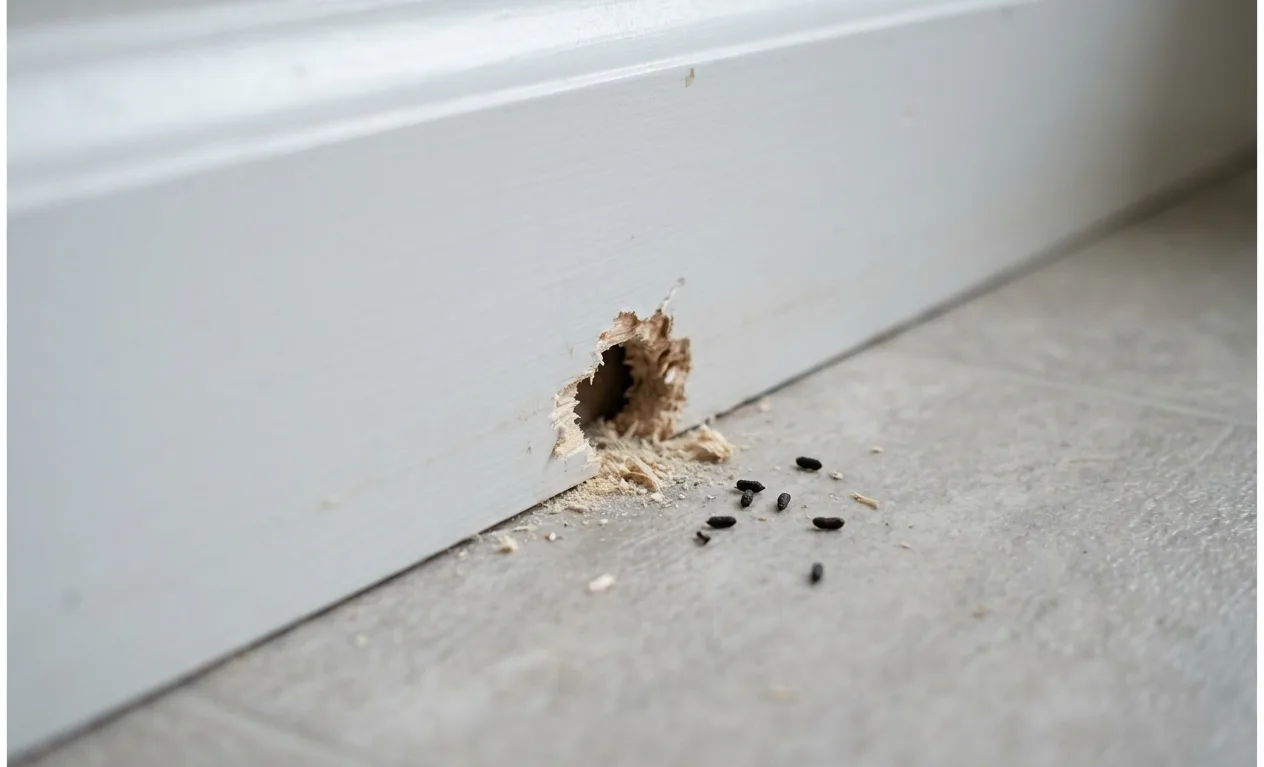
Signs that point to mice rather than rats: droppings about the size of a grain of rice with pointed ends; light, quick scratching in walls or ceilings after dark; small ragged holes chewed in cereal boxes and bread bags; shredded paper or insulation gathered into a loose ball.
Where Mice Live in Walk-Ups, Two-Families and Row Houses
In the attached and stacked housing that makes up much of this part of New Jersey, mice rarely come in from outside once a building is established. They live in it. The spaces they use most:
- The kitchen wall. The void behind the stove and refrigerator is warm, dark and next to food. Gaps where the gas line, water line and drain pass through the wall are the doorways.
- Pipe and radiator chases. Old heating risers and plumbing stacks run floor to floor with loose collars at each level, letting mice move between apartments unseen.
- Cabinet bases and toe kicks. The hollow space under kitchen cabinets is one of the most common nest sites we open up.
- Cellars and storage rooms, especially where cardboard, bagged goods and recycling collect.
That is why the apartment next door matters. If the mice are nesting in a shared wall, clearing one unit leaves the colony intact on the other side, and new mice fill the space. In a two-family house the same applies between the upstairs and downstairs flats.
Trapping, Sealing and Knowing When It Is Finished
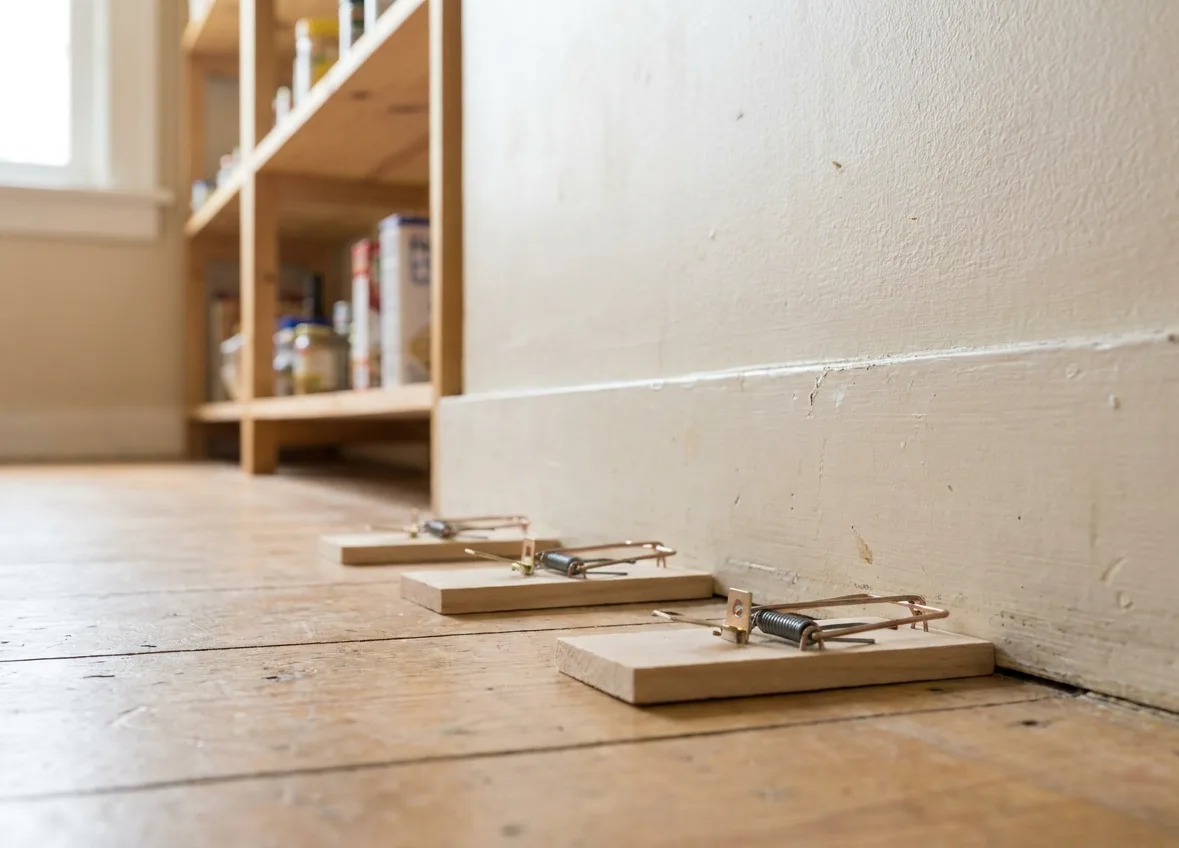
Traps go where the mice travel, not where they were seen. Mice keep to edges, so traps sit flush against walls, behind appliances, inside the base of cabinets and along pipe runs, with the trigger end facing the wall. Because a mouse feeds from many small points, a real interior setup uses many traps spread through the nest zone rather than a couple in the open.
The tools we lean on:
- Snap traps — quick and reliable in the right spot, baited with a smear of nut butter or a twist of cotton wool, which mice gather as nesting material.
- Multiple-catch box traps for runs inside cellars, cabinet bases and ceiling voids, where several mice use the same path.
- Non-toxic monitoring blocks — gnaw marks on them tell us whether activity is still present after the catches stop.
We do not rely on glue boards. They catch whatever walks across them, including pets and birds, and they are a slow way for an animal to die.
Closing the gaps. A mouse can squeeze through a hole about a quarter of an inch across, so the sealing has to be thorough. Copper mesh or stainless mesh packed tight and finished with sealant or mortar holds; foam on its own does not, and neither does anything a mouse can grip and pull. Door sweeps, garage door bottom seals and dryer vent flaps close the gaps people forget.
How we know it is over. Droppings are cleared at the start so that fresh ones can be spotted. The job is finished when traps stop catching, monitoring blocks stay unmarked and no new droppings appear across two consecutive checks — not simply after a set number of visits.
Renting, Owning and Getting It Dealt With
If you rent, mice in a New Jersey apartment are a maintenance and habitability matter for the owner. Put it to the landlord or managing agent by email or letter, listing dates and what you have seen, and hold on to that record. If nothing changes, escalate to the town's health officer or code official; apartment buildings registered as multiple dwellings are also on the state Bureau of Housing Inspection's inspection cycle.
If you own a two-family or a small building, treating the whole building together is cheaper in the end than treating one unit at a time, because the mice are shared.
Tenants can help the work succeed: store dry food in glass or hard plastic containers, keep counters and the floor under the stove clear of crumbs overnight, and take rubbish out daily rather than leaving an open bag in the kitchen.
Why it is worth doing properly. Mouse urine proteins are one of the better-studied indoor allergens, and children with asthma in homes with persistent mouse activity are measurably affected by them. Mice also contaminate stored food as they nibble, and they gnaw cable insulation inside walls. Throw away any food package with chew marks, and wipe shelves with a disinfectant once droppings have been removed.
General information about the rules as written, not legal advice about your situation. Confirm current requirements with the agency named before relying on them.
Mouse Control — Common Questions
I only ever see one mouse. Is it really just one?
It is rarely just one. Mice are mostly out of sight, and the one you notice is usually the boldest of a group nesting nearby. Count droppings in fresh spots over a few days rather than counting sightings.
Why do the mice keep coming back after the upstairs tenant got rid of theirs?
Because the colony lives in the shared walls and chases, not in anyone's apartment. When one unit is trapped and the others are not, survivors move across. Treating the connected units in the same week is what breaks that cycle.
Can I use poison instead of traps?
Not inside an occupied apartment, in our view. Poisoned mice often die inside walls, where they cannot be reached and the smell affects every unit sharing that wall. Traps let the animals be removed.
Pest Pressure in Elizabeth, NJ
Elizabeth is the fourth-largest city in New Jersey and the Union County seat, and it sits at the meeting point of more heavy infrastructure than almost anywhere in the state: Port Elizabeth and the container terminals on Newark Bay, Newark Liberty airport along the northern boundary, the Bayway refinery complex in the south, and the New Jersey Turnpike running through the middle of it.
That infrastructure is the defining pest driver. Port land, rail yards, refinery perimeter and highway embankment give Norway rats continuous harborage across large areas with no residential occupier and no one treating it, and rats move from there into the surrounding neighbourhoods rather than the other way around.
The Elizabeth River runs through the city and its low ground holds water and floods. Elizabethport in the east sits lowest, on made ground near the bay, with the oldest and densest housing. Peterstown — the Burg — and Midtown carry dense attached housing and heavy restaurant density. Elmora and Westminster in the west are higher, greener and more single-family. An ageing combined sewer system surcharges in heavy rain across the older sections.
Elizabeth uses ZIPs 07201 through 07208.
What Elizabeth Buildings Are Made Of
Elizabeth's stock runs from some of the oldest housing in the state to modern development, and the difference matters enormously.
In Elizabethport, Peterstown and Midtown: two-, three- and four-family frame houses from before 1930, packed on narrow lots with party walls or gaps too tight to walk down, plus pre-war brick apartment buildings along the avenues. Balloon framing is common, so a mouse entering at the sill plate reaches the attic inside the wall cavity. Stacked kitchens and bathrooms share plumbing risers running cellar to roof with the escutcheon plates missing, which is the German cockroach and bed bug route between units and the standard reason single-apartment treatment fails.
Cellars are unfinished with floor drains on old laterals — American cockroach every time the sewer surcharges — and on the low eastern ground they are damp year round, which suits subterranean termites.
In Elmora and Westminster: detached single-family colonials and capes on proper lots with basements, garages, yards and mature foundation planting, bringing the suburban list of termites, carpenter ants tracking roof leaks, and squirrels through soffit returns.
The city also carries a large amount of commercial and warehouse space where dock doors and levellers are the rodent route.
The Calls We Get Most in Elizabeth
Rats moving in from port, rail and highway land. The defining outdoor problem, and one that private treatment of a single property cannot resolve because the harborage is off-property.
German cockroach through all floors of a multi-family. Shared kitchen risers in the older eastern sections.
Water bugs in cellars after rain. Combined sewer surcharge through dried floor drain traps.
Mice on upper floors with entry at grade. Balloon-framed walls.
Termites on the low ground toward the bay and the river. Damp soil against low sill plates.
Bed bugs in high-turnover rentals spreading between attached units.
Rodents at warehouse dock doors across the industrial corridors.
Local Rules and Who to Call in Elizabeth
Elizabeth's health department and code enforcement handle pest and property maintenance complaints, including vacant-property conditions. Rental buildings of five units or more are registered under New Jersey's Hotel and Multiple Dwelling Law and inspected on a cycle by the New Jersey Department of Community Affairs, Bureau of Housing Inspection, which is often the more effective route for a tenant whose landlord is not responding — report in writing, keep the copy, then escalate to both. The Union County mosquito control programme carries out larval surveillance and treats catch basins and standing water on public land at no charge, which reaches the river corridor and storm-system sources that yard treatment cannot.
Areas We Cover in Elizabeth
- Elizabethport
- Peterstown
- Midtown
- Elmora
- Westminster
- North Elizabeth
- Frog Hollow
- Bayway
- Elizabeth River corridor
ZIPs 07201 through 07208.
Elizabeth — Local Questions
We do everything right and still get rats. Why?
Because in large parts of Elizabeth the harborage is not on residential property at all. Port land, rail yards, refinery perimeter and highway embankments provide continuous cover and food, and Norway rats forage well beyond the burrow. Keeping your own property clear genuinely helps and burrow work on your lot helps, but the durable improvements come from pressure on the off-property sources — which means reporting them to the city rather than paying to treat the symptom repeatedly.
Our building has roaches on every floor. Is that one infestation or several?
One. In this housing stock the apartments share plumbing risers running from the cellar to the roof, and where the escutcheon plates are missing there is an open gap at every floor. The roaches live in that chase and appear in whichever kitchen is currently most rewarding. It has to be treated as a single building population, with all occupied units baited on the same day and the penetrations sealed.
Mouse Control Near Elizabeth
We cover the surrounding towns from the same base, so if you are just outside Elizabeth the nearest service pages are below.
- Mouse Control in Linden, NJ 3 mi
- Mouse Control in Union, NJ 4 mi
- Mouse Control in Irvington, NJ 4 mi
- Mouse Control in Bayonne, NJ 5 mi
- Mouse Control in Rahway, NJ 5 mi
In Elizabeth we also handle rodent control, rat removal, and general pest control. Our main service pages cover rodent control, cockroach control and bed bug extermination.
📍 On the map
Droppings in the Kitchen Drawer?
Where there is one mouse, the rest are usually nesting a few feet away. Book a free estimate and we will find where they live.
Call About MiceHow Mouse Control Runs in Elizabeth
Four stages, from the first dropping to the last empty trap
Mouse work is about location and follow-through. This is the order a Elizabeth job follows from your side.