
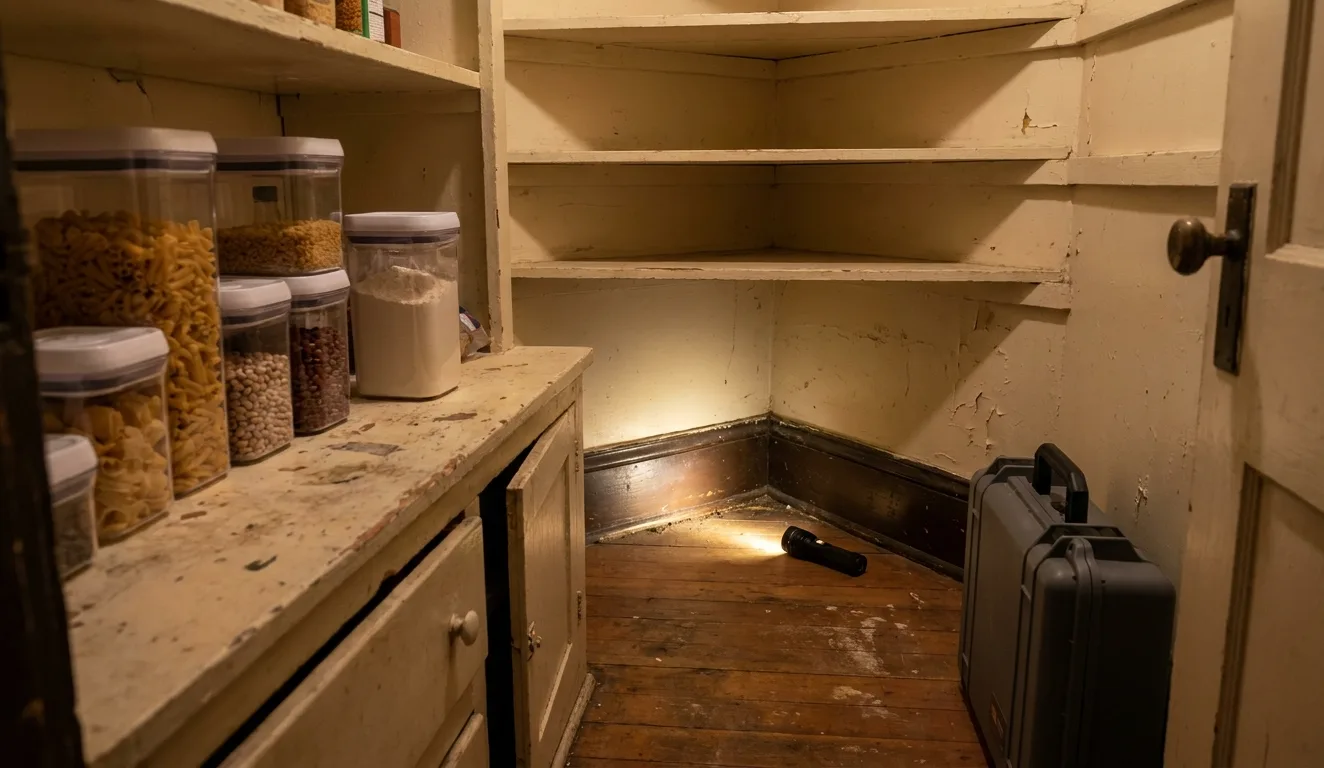
Mouse Control in Fort Lee, NJ
Mice nest inside the building they are eating in. We find the nest zone, trap it and close the gaps. Free estimate, written scope.


Autumn Entry Points First
When nights cool, Fort Lee mice look for a way in at ground level. Garage door corners, dryer vents and sill gaps get checked before anything else.
House Mouse or Field Mouse
A white-bellied deer mouse from the wooded edge behaves differently from a house mouse born in your wall. Knowing which one sets the plan.
Monitoring Until It Stops
Traps are checked, reset and moved on a schedule, and the job ends on evidence — clean monitors and no fresh droppings — not on a calendar date.
Local Mouse Control for Fort Lee Property Owners
We are a pest control company working across Bergen County, and Fort Lee is one of the places we are called to most often. What follows is what we actually know about mouse control here — the building types, the conditions that drive it, and the local rules — rather than a page of stock copy with a place name dropped into it.
If something is turning up in your Fort Lee home or business, call (862) 256-6829 for an inspection. You will get an honest read on what is there and a written estimate before anything is scheduled.

Fort Lee, NJ at a Glance
Fort Lee sits in Bergen County at roughly 948 feet above sea level and is home to about 40,191 people. Those numbers matter more than they look: density, elevation and age of the housing stock are the three things that decide which pests a place actually gets.
| Population | 40,191 (2020 Census) |
|---|---|
| County | Bergen County, NJ |
| Elevation | 948 feet above sea level |
| ZIP codes | 07024 |
Population from the 2020 US Census. Elevation, ZIP and founding data via Wikidata.
Pest Pressure in Fort Lee This Week
Today in Fort Lee: Slight Chance Showers And Thunderstorms then Mostly Sunny, around 85°F. A slight chance of showers and thunderstorms before 8am. Mostly sunny, with a high near 85. Northwest wind 5 to 9 mph. Chance of precipitation is 20%. New rainfall amounts less than a tenth of an inch possible.
Tonight 67°F, partly cloudy · Saturday 81°F, sunny · Saturday Night 63°F, partly cloudy
Right now mosquito pressure is high because of mean temperatures around 77°F; general pest pressure is moderate because of daytime temperatures in the foraging range.
Mice and the forecast. A house mouse already nesting in your walls barely notices the weather. What the forecast changes is arrivals: once overnight lows slip into the 40s, mice living in sheds, hedges and wall bases start looking for warmth, and the rodent row above climbs with each cool night. Heavy rain adds to it by soaking outdoor nest sites. The practical reading is simple: when the row turns high in autumn, finish the sealing before the next cold spell rather than after it.
Forecast from the National Weather Service (public domain). Pest pressure is our own index, calculated from temperature, rainfall and humidity. Updated 2026-09-04.
Mice, Rats or Both? Rodent Help in Fort Lee
Mice and rats get in differently, live differently and are dealt with differently, so we run three separate Fort Lee pages. Pick the one that matches what you are finding.
House Mouse Habits That Decide the Job
Almost every mouse call in this region is the house mouse (Mus musculus), and four habits of that animal shape the entire job.
- It stays close to home. A house mouse commonly lives its whole life within a few metres of its nest. If you see one in the kitchen, the nest is inside the building — usually in a wall void, under a cabinet base or in insulation — not out in the yard.
- It nibbles. Rather than eating a meal in one place, a mouse takes small amounts from many spots through the night. That is why a single trap by the fridge rarely finishes anything.
- It breeds quickly. A female can be pregnant again within days of giving birth, and young mice are mature within about two months, so a pair in October can be a household problem by Christmas.
- It marks as it goes. Mice leave a constant trail of tiny urine droplets and droppings along the routes they use, which is where the musty smell comes from.
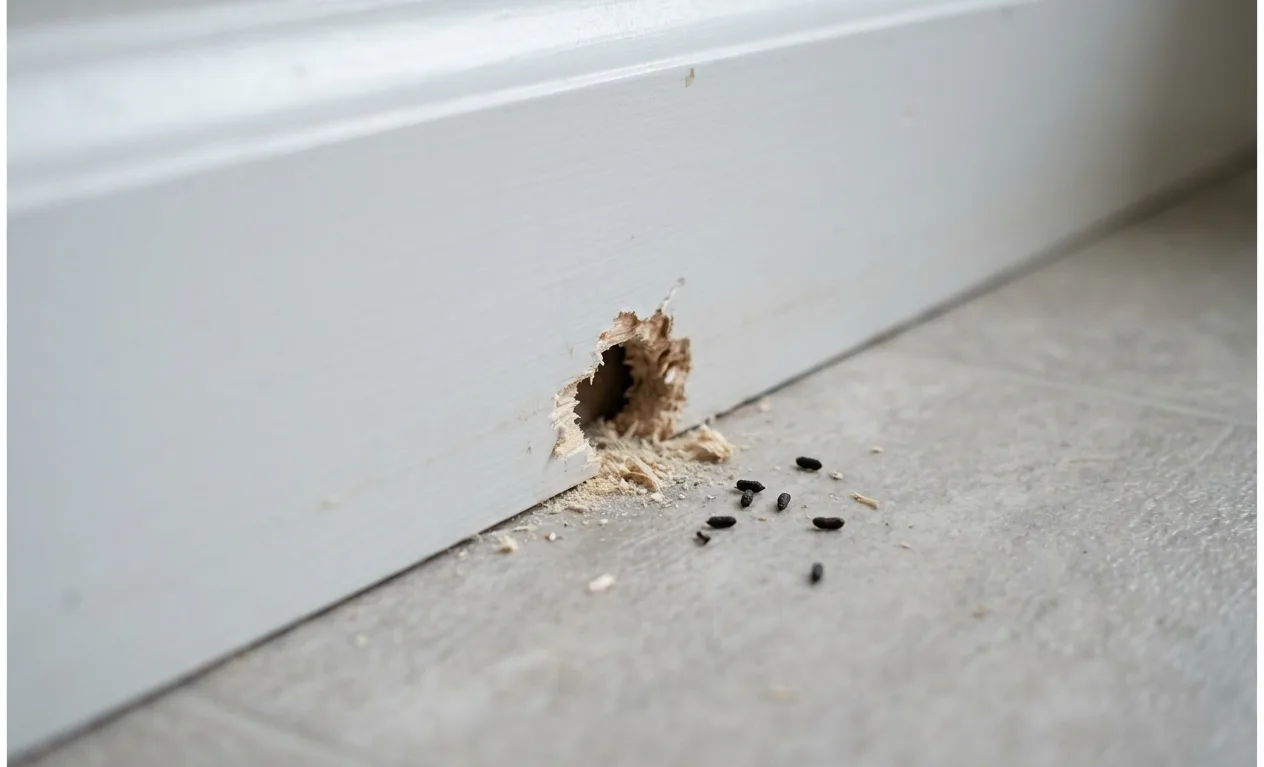
Signs that point to mice rather than rats: droppings about the size of a grain of rice with pointed ends; light, quick scratching in walls or ceilings after dark; small ragged holes chewed in cereal boxes and bread bags; shredded paper or insulation gathered into a loose ball.
The suburban exception. Where gardens back onto woodland or fields, some calls turn out to be deer mice or white-footed mice — larger-eyed, with a sharply white belly and feet. They tend to arrive in autumn, favour garages, sheds, cabins and storage boxes, and are more likely to be carrying seeds from outside. They are also the species most associated with hantavirus. Cases in the north-east are rare, but it is the reason droppings from these animals should be wetted with disinfectant before anyone cleans them up, never swept or vacuumed dry.
How Mice Get Into a Suburban House
In detached houses the problem usually starts outside and arrives in autumn. Mice living in hedges, woodpiles, sheds and the base of walls move in as nights cool, and they come in where the house meets the ground.
- The garage. A garage door that no longer meets the floor at the corners, or a door from the garage into the house without a sweep, is the single most common route.
- Utility entries. Air-conditioning line sets, outdoor taps, gas lines and cable entries all leave gaps where they pass through the wall.
- The sill and rim joist, where the timber frame sits on the foundation, especially on older houses with settled masonry.
- Dryer vents and crawlspace vents with missing flaps or torn screens.
Once inside, mice settle in finished basements, behind the dishwasher, in attic insulation and in stored boxes, and they breed through the winter. Clutter in a garage or basement gives them places to nest right beside the way in.
Trapping, Sealing and Knowing When It Is Finished
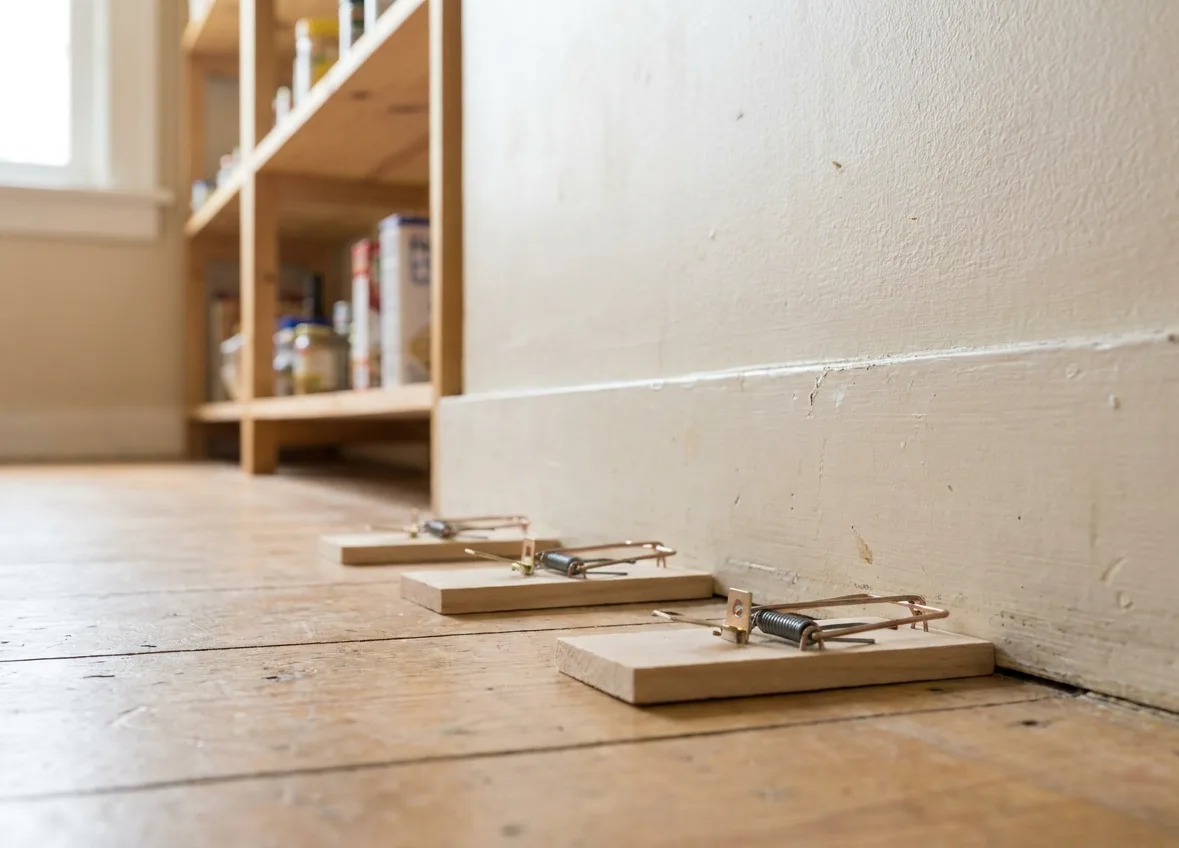
Traps go where the mice travel, not where they were seen. Mice keep to edges, so traps sit flush against walls, behind appliances, inside the base of cabinets and along pipe runs, with the trigger end facing the wall. Because a mouse feeds from many small points, a real interior setup uses many traps spread through the nest zone rather than a couple in the open.
The tools we lean on:
- Snap traps — quick and reliable in the right spot, baited with a smear of nut butter or a twist of cotton wool, which mice gather as nesting material.
- Multiple-catch box traps for runs inside cellars, cabinet bases and ceiling voids, where several mice use the same path.
- Non-toxic monitoring blocks — gnaw marks on them tell us whether activity is still present after the catches stop.
We do not rely on glue boards. They catch whatever walks across them, including pets and birds, and they are a slow way for an animal to die.
Closing the gaps. A mouse can squeeze through a hole about a quarter of an inch across, so the sealing has to be thorough. Copper mesh or stainless mesh packed tight and finished with sealant or mortar holds; foam on its own does not, and neither does anything a mouse can grip and pull. Door sweeps, garage door bottom seals and dryer vent flaps close the gaps people forget.
How we know it is over. Droppings are cleared at the start so that fresh ones can be spotted. The job is finished when traps stop catching, monitoring blocks stay unmarked and no new droppings appear across two consecutive checks — not simply after a set number of visits.
What Owners Can Do Between Visits
Take away the reasons to stay. Birdseed, grass seed and pet food kept in paper sacks in the garage feed a lot of mice; move them into metal or hard plastic bins with tight lids. Stack firewood on a rack well clear of the siding, and cut back shrubs and ivy that touch the walls.
Store things off the floor. Plastic storage totes with clip-on lids are far less inviting than cardboard boxes, which mice chew into and nest in.
Condominiums and townhouses. If you share walls with a neighbour, the association may be responsible for common areas such as the exterior envelope and shared utility spaces. Raise it with the association in writing so the building can be dealt with as a whole.
Cleaning up safely. Put on gloves, spray droppings and nesting material with a disinfectant or a diluted bleach solution, let it soak for several minutes, then wipe up with paper towels and bag everything. Dry sweeping and vacuuming lift dust from droppings into the air, which is the step to avoid.
Why it is worth doing properly. Mouse urine proteins are one of the better-studied indoor allergens, and children with asthma in homes with persistent mouse activity are measurably affected by them. Mice also contaminate stored food as they nibble, and they gnaw cable insulation inside walls. Throw away any food package with chew marks, and wipe shelves with a disinfectant once droppings have been removed.
General information about the rules as written, not legal advice about your situation. Confirm current requirements with the agency named before relying on them.
Mouse Control — Common Questions
We only get mice in autumn and winter. Why?
Outdoor mice move indoors as nights turn cold and food outside runs short. If the entry points were never sealed, the same routes let a new group in each year. Sealing in late summer is the best timing.
Should we set traps in the attic where we hear them?
Usually the noise is the route, not the source. Mice climb inside wall cavities from ground level to the attic, so the entry point and the most useful trap sites are often much lower in the house.
Is it safe to clean up droppings in the shed ourselves?
Yes, with care. Air the shed first, wear gloves, and wet everything down with disinfectant before wiping it up. Do not sweep or vacuum it dry.
Pest Pressure in Fort Lee, NJ
Fort Lee is under three square miles at the New Jersey end of the George Washington Bridge, sitting on top of the Palisades cliff, and it holds one of the densest concentrations of high-rise residential buildings anywhere in New Jersey. That vertical density, more than any natural feature, is what defines pest work here.
The cliff itself is a genuine factor. The Palisades Interstate Park land below and along the ridge is rock, talus and woodland, and rock-crevice harborage gives Norway rats somewhere no interior treatment reaches. The wooded ridge also puts raccoons, squirrels and occasionally bats in contact with buildings at the eastern edge in a way the borough's interior does not see.
Main Street, Lemoine Avenue and the blocks around them carry a very high density of restaurants and food businesses in a compact footprint, much of it with limited rear service access, and that is the principal rodent driver. The bridge approach and Route 4 and 95 interchanges add embankment and fenceline harborage. Coytesville in the north and Linwood Park retain older, lower-rise residential character; The Bluffs and the ridge-edge towers are the high-rise core.
Fort Lee uses ZIP 07024.
What Fort Lee Buildings Are Made Of
The borough splits sharply between high-rise and low-rise, and the two need completely different work.
The towers — co-ops, condominiums and rentals, many from the 1960s through the 1980s and a newer generation since — have compactor chutes, trash rooms, structured parking, loading bays and long horizontal service corridors. Pest movement is vertical through riser chases and the chute, and horizontal along corridors and parking levels. Missing escutcheon plates at riser penetrations are the standard German cockroach, mouse and bed bug route between stacked apartments. In a co-op or condo, the practical obstacle is often governance rather than entomology: building-wide work needs a board decision, and unit-by-unit treatment is what happens in the meantime.
The low-rise stock in Coytesville and the older streets is two-family frame and post-war single-family with basements, garages and small yards, with the usual sill-entry and moisture issues.
The borough's restaurant density means a significant share of the work is commercial kitchen work, where the drivers are grease, floor drains and delivery-door discipline.
The Calls We Get Most in Fort Lee
German cockroach through a stack of apartments in a tower. Shared kitchen risers. Needs line-wide treatment and sealed penetrations.
Bed bugs moving between adjoining units. Wall voids and outlet boxes; high turnover in the rental towers accelerates it.
Compactor and chute flies. Biofilm inside the chute, not flies from outside.
Mice in the towers. Travelling riser chases and service corridors, often nesting on the top floor.
Rats around the Main Street and Lemoine Avenue restaurant blocks and along the bridge approach embankments.
Wildlife at the ridge edge. Raccoons and squirrels from the Palisades woodland into rooflines and terraces.
Restaurant kitchen work. Drain flies, German roach and rodent pressure at delivery doors.
Local Rules and Who to Call in Fort Lee
Fort Lee's health department and code enforcement handle property maintenance and pest complaints. Rental buildings of five units or more are registered under the Hotel and Multiple Dwelling Law and inspected on a cycle by the New Jersey Department of Community Affairs. Co-ops and condominiums are a different situation: there the responsibility for common elements — risers, chutes, corridors, parking levels — sits with the association, and the practical step is getting a written inspection report in front of the board, because that is what converts a resident complaint into an agenda item and a budget line. For mosquitoes, the Bergen County mosquito control programme treats catch basins and public-side standing water at no cost, which matters in a borough where much of the breeding is in the storm system rather than in gardens.
Areas We Cover in Fort Lee
- Main Street corridor
- Lemoine Avenue
- Coytesville
- Linwood Park
- The Bluffs
- Palisade Avenue
- Hudson Terrace
- Bridge Plaza area
ZIP 07024 covers the borough.
Fort Lee — Local Questions
I am in a condo and the board will not authorise building-wide treatment. What can I do?
Get it in writing and get it in front of them properly. A written inspection report that names the species, identifies the riser and chute routes and states plainly that unit-by-unit treatment will not resolve a building population is much harder for a board to defer than a resident complaint. Common elements are the association's responsibility, and boards generally act once the alternative — paying for repeated ineffective unit treatments indefinitely — is set out in a document.
We are on a high floor. How are mice getting up here?
Through the building rather than from outside. Riser chases carrying plumbing and heating pipes run from the basement to the roof, and where the escutcheon plates at each floor are missing there is an open gap at every level. Mice use that vertically and frequently nest on the top floor where it is warmest and least disturbed. Sealing your own penetrations helps; sealing the chase throughout the building is what actually resolves it.
Mouse Control Near Fort Lee
We cover the surrounding towns from the same base, so if you are just outside Fort Lee the nearest service pages are below.
- Mouse Control in Teaneck, NJ 4 mi
- Mouse Control in North Bergen, NJ 5 mi
- Mouse Control in Hackensack, NJ 5 mi
- Mouse Control in West New York, NJ 5 mi
- Mouse Control in Bronx, NY 5 mi
In Fort Lee we also handle rodent control, rat removal, and general pest control. Our main service pages cover rodent control, cockroach control and bed bug extermination.
📍 On the map
Droppings in the Kitchen Drawer?
Where there is one mouse, the rest are usually nesting a few feet away. Book a free estimate and we will find where they live.
Call About MiceHow Mouse Control Runs in Fort Lee
Four stages, from the first dropping to the last empty trap
Mouse work is about location and follow-through. This is the order a Fort Lee job follows from your side.